

Dry Needling In Knoxville
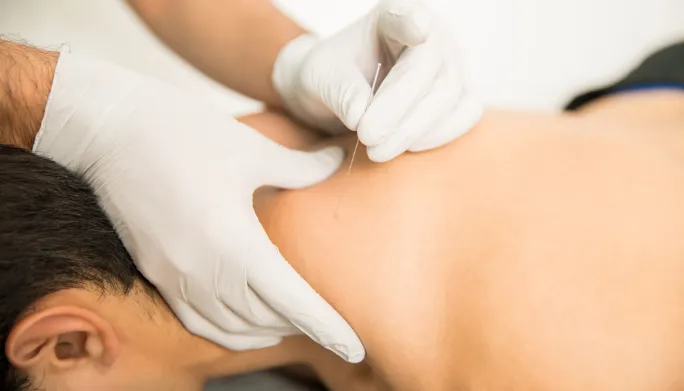
If you’ve found a tight, tender knot in a muscle that refers pain when you press on it and it hasn’t budged with stretching or massage, you’re probably dealing with a myofascial trigger point. Dry needling is one of the more direct tools we have for resolving it.
Dry needling, also called intramuscular stimulation (IMS) or trigger point dry needling (TDN), uses a thin, sterile filament needle inserted directly into the muscle to trigger a local twitch response and release the shortened, overactive tissue causing your pain. At Marino Physiotherapy in Knoxville, it’s used as one tool inside a broader treatment plan, not a standalone quick fix.
Dry Needling vs. Acupuncture: What’s Actually Different
Both use a similar thin, solid needle, and both can trigger the release of endorphins for pain relief. That’s where the similarity ends. Acupuncture is rooted in traditional Chinese medicine and works by influencing the flow of qi along meridians. Dry needling is grounded in Western neuroanatomy: your therapist is targeting a specific, palpable trigger point based on musculoskeletal and neuromuscular assessment, not an energy pathway. If you’ve had acupuncture and are wondering whether dry needling will feel the same, expect a more targeted, often more intense local response. That twitch is the treatment working, not a side effect.
How the Treatment Works
Your therapist inserts the needle directly into the trigger point and manipulates it to produce a local twitch response, an involuntary spinal cord reflex. That twitch releases the shortened muscle fibers causing your pain and, in many cases, activates underactive muscles around the same area. Because deactivating the trigger point often brings fast relief, we frequently follow the needling immediately with movement, training your newly available range of motion before the tissue has a chance to guard again.
Most people need two or three sessions to see the full effect, though more complex or long-standing trigger points can take up to six visits. Frequency is usually once or twice a week, adjusted based on how your tissue responds.
Conditions We Treat With Dry Needling
Dry needling has a strong track record for musculoskeletal conditions where a trigger point is part of the picture, including:
- Headaches and neck pain, including whiplash and cervicogenic headaches
- TMJ/TMD and jaw tension
- Shoulder pain, including rotator cuff irritation, bursitis, and frozen shoulder
- Elbow, wrist, and hand pain, including tennis elbow, golfer’s elbow, and carpal tunnel-related tension
- Back pain and sciatica, including disc-related and degenerative presentations
- Hip and knee pain
- Foot and ankle pain, including plantar fasciitis and shin splints
- Post-surgical stiffness, sports-related overuse injuries, and pain from motor vehicle accidents
- Chronic pain conditions like myofascial pain syndrome and fibromyalgia
What a Trigger Point Actually Feels Like
Most patients can find their own trigger points once they know what they’re looking for: a small, tender knot within the belly of a muscle, often described as feeling like a marble or a hard band. Pressing on it frequently reproduces pain somewhere else: a trigger point in the upper trapezius, for example, commonly refers pain up into the head. That referral pattern is a big part of why some headaches, jaw pain, and even hand tingling trace back to a muscle nowhere near where the symptom shows up.
Getting the Most Out of Dry Needling
Immediate relief after a session is common, but it’s rarely the whole story. Trigger points come back if the underlying cause (overuse, poor movement mechanics, or unmanaged stress) isn’t addressed. That’s why dry needling at our clinic is usually built into a larger plan that includes manual therapy for joint restrictions, progressive strengthening, and, when appropriate, orthopedic therapy for the injury driving the tension in the first place. Your evaluation will determine which pieces you actually need.
Frequently Asked Questions
Is dry needling safe?
Yes, when performed by a therapist trained and credentialed in the technique. It’s a targeted, evidence-informed treatment, not a folk remedy. Expect your therapist to explain exactly what they’re treating and why before they start.
Does dry needling hurt?
Most patients feel a brief ache or cramping sensation during the twitch response, then relief afterward. Some soreness for a day or two, similar to post-workout muscle soreness, is common and expected.
How is dry needling different from a cortisone injection?
A cortisone shot reduces inflammation chemically. Dry needling mechanically resets the muscle’s contraction pattern at the trigger point, a different mechanism, and it’s often used for different problems.
Can dry needling be combined with other physical therapy techniques?
Yes, it’s frequently paired with manual therapy and targeted exercise in the same treatment plan rather than used on its own.
Find Out If Dry Needling Is Right for You
Not every trigger point needs a needle, and not every case of muscle tension is actually a trigger point. Contact our Knoxville office for an evaluation, and we’ll tell you honestly whether dry needling belongs in your plan.

Tom Frye

I am going to Marino physiotherapy for a torn rotator cuff and the staff is very friendly and very knowledgeable my pain is decreasing as I speak great place, check them out

Richard Anderson
They make you feel like family here. Work you hard but that is what we all need. Very smart people!!! Joy to come and get better. Would recommend to anyone that needs help!!!!!